
Yes. Load as many models onto the same device and app as you need. You can load the off-the-shelf polymer model, and a custom raw-material model, for instance, and switch between them without new hardware.
INDUSTRIAL
Know what is in the batch before it moves downstream
Identity, homogeneity and mix ratio checked at-line for polymers, raw materials and specialty chemicals. Start with the ready-to-use polymer model, or build your own.
READY TODAY
Polymer identification, out of the box
A validated model you can load on day one, with no calibration project needed to get started.
40+ Polymer types, including the pairs that are easy to confuse
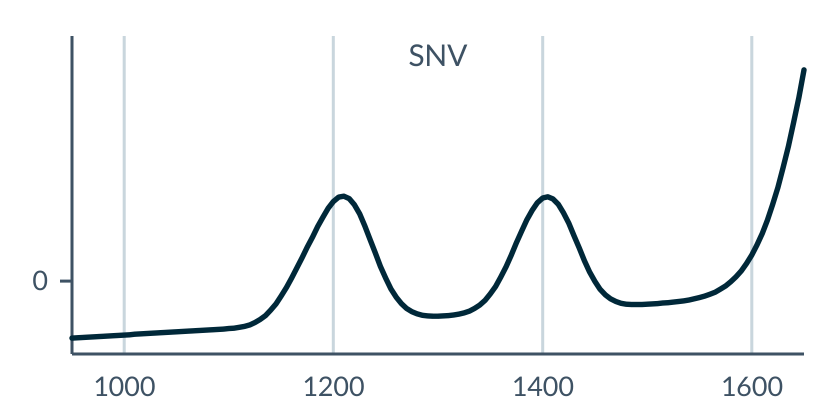
Scan flakes, pellets or finished parts and get the polymer type, including the variant calls that matter on a sorting line, such as PA6 versus PA66 and LDPE versus HDPE.
PE
PP
PET
PS
PVC
ABS
POM
PMMA
EVA
PC
TPR
and 25+ more
EXAMPLE RESULT
Flake_sample_2207
Polymer
Confidence high
PA66
Polymer match
Resolved versus PA6
Variant check: PA66, not PA6
Contaminant flags: none
Example result. Values are illustrative; your parameters and thresholds are set during calibration.
CUSTOM MODELS
Built around your samples
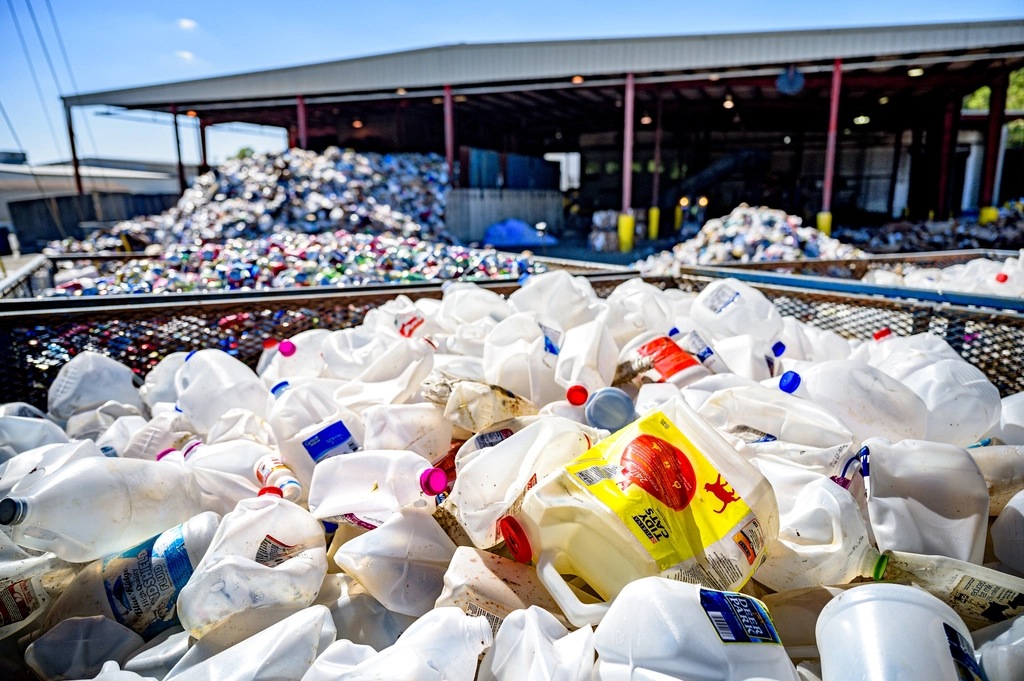
Beyond the polymer model, we calibrate a model on your own reference samples for anything else in your process.
Recycled plastics
Polymer type
Purity
Contaminant screen
Grade match
and other parameters
Specialty chemicals and raw materials
Identity
Purity indicator
Batch consistency
Supplier match
and other parameters
Lubricants and industrial oils
Degradation
Contamination
Water content
Viscosity trend
and other parameters
Cosmetics and personal care
Raw material identity
Actives
Moisture
Batch consistency
and other parameters
Textiles and fibers
Fiber type
Blend ratio
Moisture
Quality grade
and other parameters
Your own material
Any other raw material, intermediate or finished product on your line.
WHY IT MATTERS
Off-spec does not wait for the lab, and neither should you
Every batch that runs while you wait for lab confirmation is a batch you might have to rework or scrap. Scanning at-line catches grade drift or contamination before it moves downstream.
Every scan is logged with a timestamp, device ID and result, building a consistency record across suppliers, lines and shifts rather than a single pass or fail.
IN PRACTICE
PA6 and PA66 are almost identical in appearance and chemistry. The polymer model tells them apart in one scan, so mixed polyamide streams can be sorted correctly.
HOW A MEASUREMENT WORKS
Three steps to a result
Whether your model comes from our library or was built on your samples, scanning works the same way.
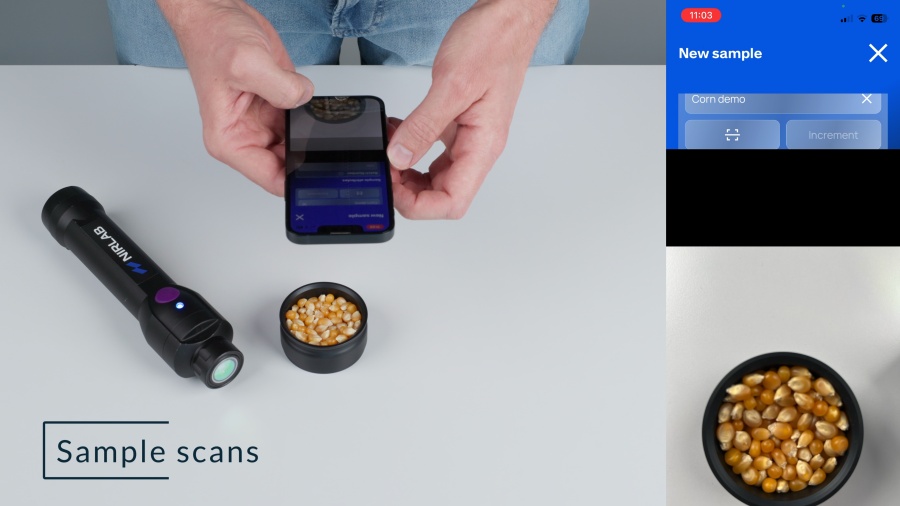
1
Connect
Pair the device with the NIRStudio app on your phone.
2
Scan
Choose your model, place the device on the sample and press the button.
✓
Result
Read the result in the app. It is stored and synced to the web platform.
YOUR MODEL
How your model gets built
For anything outside the ready-to-use polymer model, it starts with real samples from the conditions your line runs in.
1
Scan and send
Scan each sample with the device and send the same sample to a lab for certified reference analysis.
2
We build your model
We match your scans to the reference results and build a calibration validated against them.
3
Ready to use
Your model loads into the NIRStudio app, ready for your team to scan against.
Not sure NIR will work on your material? Start with a feasibility study: a short device rental and an initial model to confirm it works before you commit to a full build.
Frequently Asked Questions
Yes. Scanning and results works offline. Data syncs to your dashboard once you are back online.
NIRStudio gives a fast, non-destructive read against your spec or reference, well suited to at-line quality and consistency checks. It is built to complement certified lab testing and larger inline systems, not replace them in every case. For validated release testing, lab confirmation may still be required.
Yes, this is what custom calibration is for. Send us representative samples covering the range you process, and we build and validate a model around them.
Email, phone and video-call support, plus scheduled model updates as your materials or suppliers change. Get in touch through our contact form.
FROM THE BLOG
Read more about industrial solutions
The PA6 and PA66 Challenge: Distinguishing the Indistinguishable
In the intricate dance of molecules that shapes the materials of our daily lives, polyamides play a leading role.
Plastic Recycling Revolution: NIR Spectroscopy’s Transformative Role
In our modern world, the issue of plastic recycling has evolved into a global environmental crisis, with millions of tons of plastic produced, used, and discarded each year.
Textile Quality Assurance: Practical Guide for NIR
The integration of NIRStudio heralds a significant leap in textile manufacturing.
Comprehensive Catalogue for Polymers Detection
The full list of polymers our handheld NIR spectrometer identifies, from the big five (PE, PP, PS, PET, PVC) to PA6 vs PA66, rubbers and bioplastics.
Tell us what you need to measure
If we already have a model for your material, you can start this week. If we don’t, we will build one for you.